

Clinical Products
Rapid, Reliable Beta-D-Glucan Testing Products
The Leading Provider of Diagnostic Solutions to Detect (1→3)-β-D-Glucan as an Adjunct to the Diagnosis of Invasive Fungal Infections
The population of patients at risk of invasive fungal infections (IFI) has grown dramatically in recent years. Due to the low sensitivity and relatively long incubation times of microbial culture, the most widely used diagnostic technique, faster methods with greater sensitivity are essential for saving lives. One of those methods involves testing for the presence of (1→3)-β-D-glucan (pronounced “1,3 beta-D-glucan”), a component found in the cell walls of pathogenic fungi. Detection of elevated levels of beta-glucan provides a reliable method of diagnosing IFI in at-risk patients and accelerating an effective treatment plan.
ACC offers in-house diagnostic tests for the detection of (1→3)-β-D-glucan that physicians and healthcare providers can perform at their facility. Fungitell®, the gold standard in rapid screening for invasive fungal infection, offers high sensitivity and results within an hour. Fungitell® is also available in a single sample format. Fungitell STAT® makes it possible to test from 1 to 7 samples in a single run using the Lab Kinetics Incubating 8-well Tube Reader and Beta Glucan (BG) Analytics® software.
ACC’s Beta-D-Glucan Tests
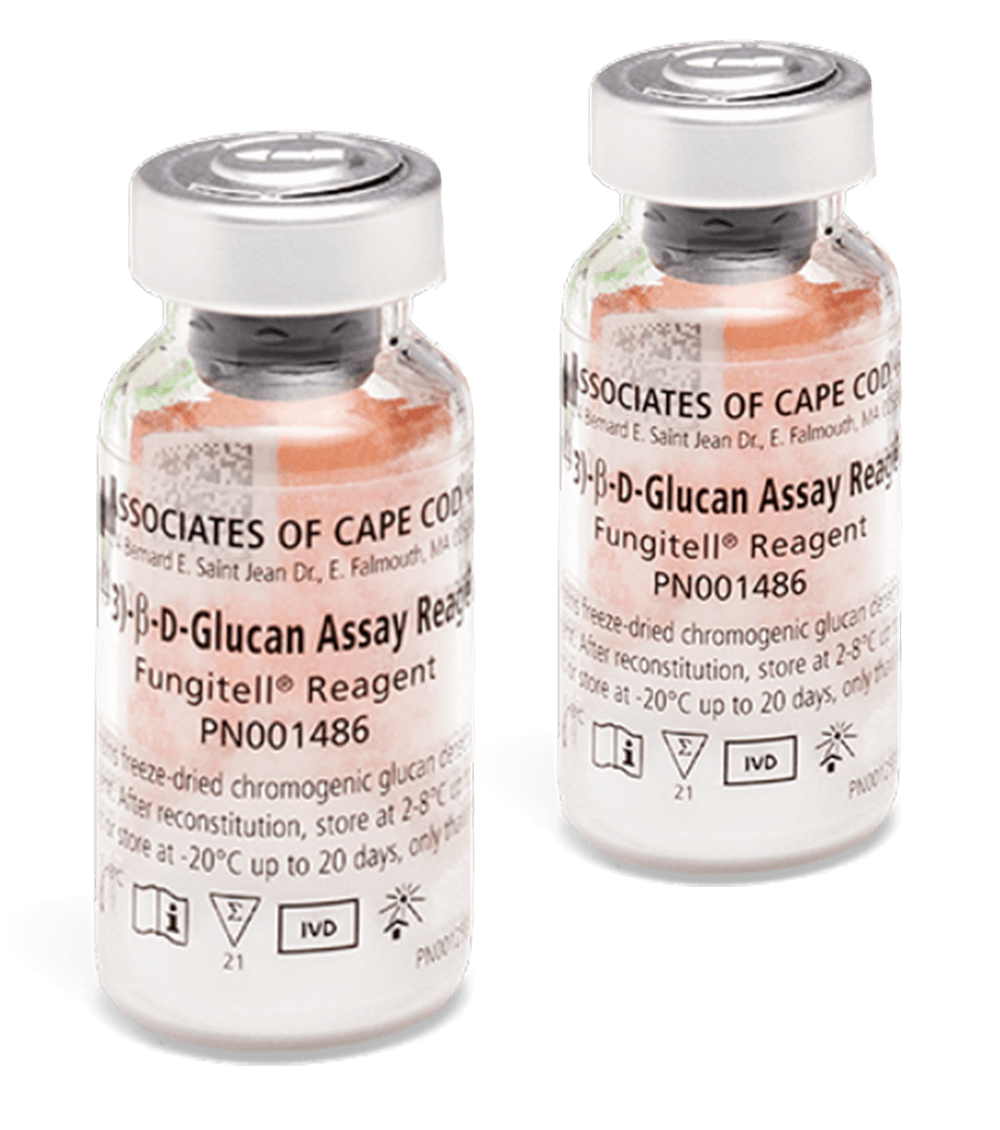
Fungitell® Assay
The Gold Standard in Rapid Screening For Invasive Fungal Infection
Fungitell® is the first and only FDA-cleared and CE-marked rapid in vitro diagnostic screening test for IFI (including Candida, Aspergillus and Pneumocystis) that detects (1→3)-β-D-glucan in serum. With over 20 years of peer-reviewed...
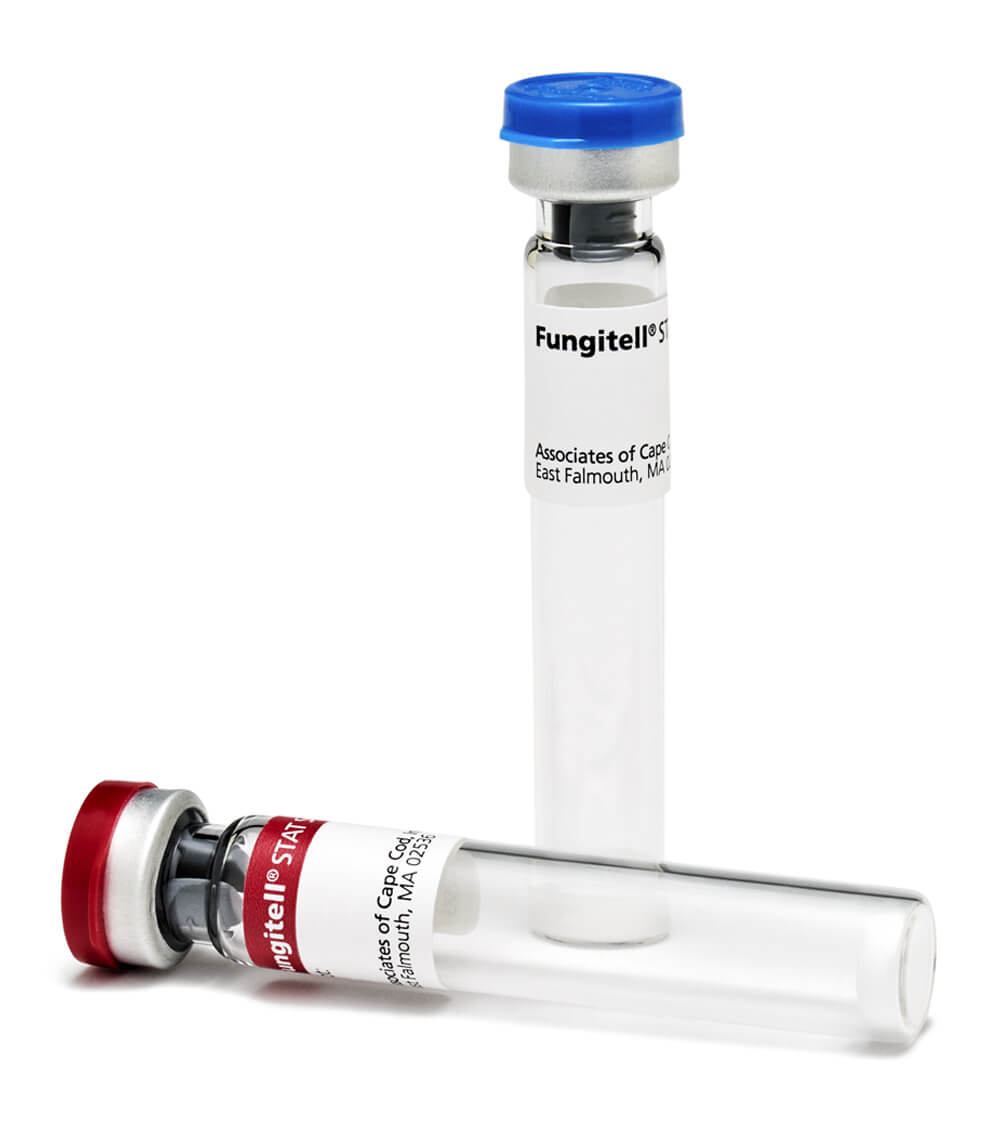
Fungitell STAT® Assay
Single Sample Format For Rapid Invasive Fungal Infection (IFI) Screening
Fungitell STAT® is the first and only single sample format FDA-cleared and CE marked rapid in vitro diagnostic screening test for IFI (including Candida, Aspergillus and Pneumocystis) that detects...

Patients At High Risk for Invasive Fungal Infections (IFI)
Immunosuppressed patients are at high risk for developing invasive fungal infections, which is often difficult to diagnose, due to non-specific clinical signs and symptoms. High-risk patient populations include:
- ICU Patients
- Gastro Surgery Patients
- Cancer Patients Receiving Chemo
- Stem Cell + Organ Transplant Patients
- HIV Patients
- Burn Patients
Why Test For (1→3)-β-D-Glucan
Most pathogenic fungi* have (1→3)-β-D-glucan in their cell walls, and minute, but detectable quantities are released into circulation during infection. Detection of elevated levels of beta-D-glucan is an aid to presumptive aspergillus diagnosis, as well as diagnosis of invasive candidiasis and other invasive fungal infections (IFI) in at-risk patients.
Multiple studies3,4,5,6,7 have shown glucan to become elevated well in advance of conventional clinical signs and symptoms. Diagnosing fungal infections and initiating treatment early are associated with improved clinical outcomes; delayed diagnosis and therapy are associated with increased mortality.8
Conversely, the elevated morbidity and mortality associated with invasive fungal infection drive potentially inappropriate systemic antifungal therapy. Research has demonstrated the utility of negative IFI test results to support decisions to withhold or withdraw antifungals with excellent patient safety.9,10,11 Hence, there is significant utility in the application of a reliable diagnostic test in at-risk patients.
Fungal Trends and Statistics
- There are an estimated 600,000 invasive fungal infections diagnosed in the USA annually with an estimated attributable cost exceeding $6 billion. Globally, more than 6.55 million people are affected by IFIs each year.1
- Among the most common fungal pathogens causing IFIs are those in the Candida and Aspergillus species.
- Aspergillus fumigatus has been designated by the World Health Organization as a critical priority fungal pathogen, making rapid and early aspergillus diagnosis essential in global healthcare environments.
- Invasive candidiasis represents the 4th leading cause of nosocomial blood stream infection and the 3rd most common ICU bloodstream infection in the US.
- Diagnosing fungal infections and treating them early have been shown to have increased survival rates in septic shock attributed to Candida infection.2
*Cryptococcus, Zygomycetes (such as Absidia, Mucor and Rhizopus) and Blastomyces dermatitidis (infective yeast form) are known to have little or no (1→3)-β-D-glucan, and thus glucan is not detected during infection with these organisms.
References
- Denning, D.W. (2024) Global incidence and mortality of severe fungal disease. The Lancet. 24:E428-E438.
- Kumar, A et al. Poster 2174 ICAAC 2007.
- Odabasi Z., Mattiuzzi G., Estey E., Kantarjian H., Saeki F., Ridge R., Ketchum P., Finkelman M., Rex J. and Ostrosky-Zeichner L. (2004) Beta-D-Glucan as a diagnostic adjunct for invasive fungal infections: Validation, cutoff development, and performance in patients with Acute Myelogenous Leukemia and Myelodysplastic Syndrome. Clinical Infectious Diseases. 39:199-205.
- Ostrosky-Zeichner L., Alexander B., Kett D., Vazquez J., Pappas P., Saeki F., Ketchum P., Wingard J., Schiff R., Tamura H., Finkelman M., and Rex J. (2005) Multicenter clinical evaluation of the (1→3)-β-D-Glucan assay as aid to diagnosis of fungal infections in humans. Clin. Inf. Dis. 41: 654-659.
- Pazos C., Ponton J., and Del Palacio A. (2005) Contribution of (1→3)-β-D-Glucan chromogenic assay to diagnosis and therapeutic monitoring of invasive aspergillosis in neutropenic adult patients: A comparison with serial screening for circulating galactomannan. J. Clin. Micro. 43(1):299-305.
- Pazos, C., Moragues, M-D., Quindos, G., and del Palacio, A. (2006) Diagnostic potential of (1→3)-β-DGlucan and anti-Candida albicans germ tube antibodies for the diagnosis and therapeutic monitoring of invasive candidiasis in neutropenic adult patients. Re. Iberoam Micol. 23: 209-215.
- Ellis, M., Ramadi, B., Finkelman, M., Hedstrom, U., Kristenson, J., Ali-Zadeh, H., and Klingspor, L. (2007) Assessment of the clinical utility of serial β-D-Glucan concentrations in patients with persistent neutropenic fever. J. Med. Microbiol. 57: 287-95.
- Morrell, M., Fraser, V., and Kollef, M. (2005) Delaying the empiric treatment of Candida bloodstream infection until positive culture results are obtained: a potential risk factor for hospital mortality. Antimicrob. Agents. Chemother. 49: 3640-3645.
- Prattes, J., Hoenigl, M., Rabensteiner, J., Raggam, R.B., Prueller, F., Zollner-Schwetz, I., Valentin, T., Hönigl, K., Fruhwald, S., and Krause, R. , Serum 1,3–beta-D-glucan for the antifungal treatment stratification at the intensive care unit and the influence of surgery, Mycoses Diagnosis, Therapy and Prophylaxis of Fungal Diseases, June 2014
- Nucci, M., Nouér, S.A., Esteves, P., Guimarães, T., Breda, G., Grassi de Miranda, B., Queiroz-Telles, F., and Colombo, A.L., Discontinuation of empirical antifungal therapy in ICU patients using 1,3-β-D-glucan, Journal of Antimicrobial Chemotherapy Advance Access published June 10, 2016.