
Glucan Detection
Minimize the Effects of Glucan Interference
For manufacturers of drugs and devices, (1→3)-β-D-glucan is considered a contaminant. Although the FDA does not regulate this immunostimulatory contaminant, it can be of concern for two reasons. One, the presence of (1→3)-β-D-glucan can give a falsely higher reading in the LAL assay for endotoxins. This could produce an Out-Of-Specification result. Two, (1→3)-β-D-glucan can contribute to adverse reactions in patients.
Common sources of glucan experienced by drug and device manufacturers include filters made from cellulose materials, plant-derived raw materials, cotton-containing enclosures, sugars, naturally derived raw materials, and cellulose products (e.g., sponges).
Examples of products found to contain glucan contamination include blood products (albumin, plasma protein, immunoglobulin preparations, and coagulation factors), oligonucleotide drugs, collagen products, saline preparations, glucose preparations, and water for injection.
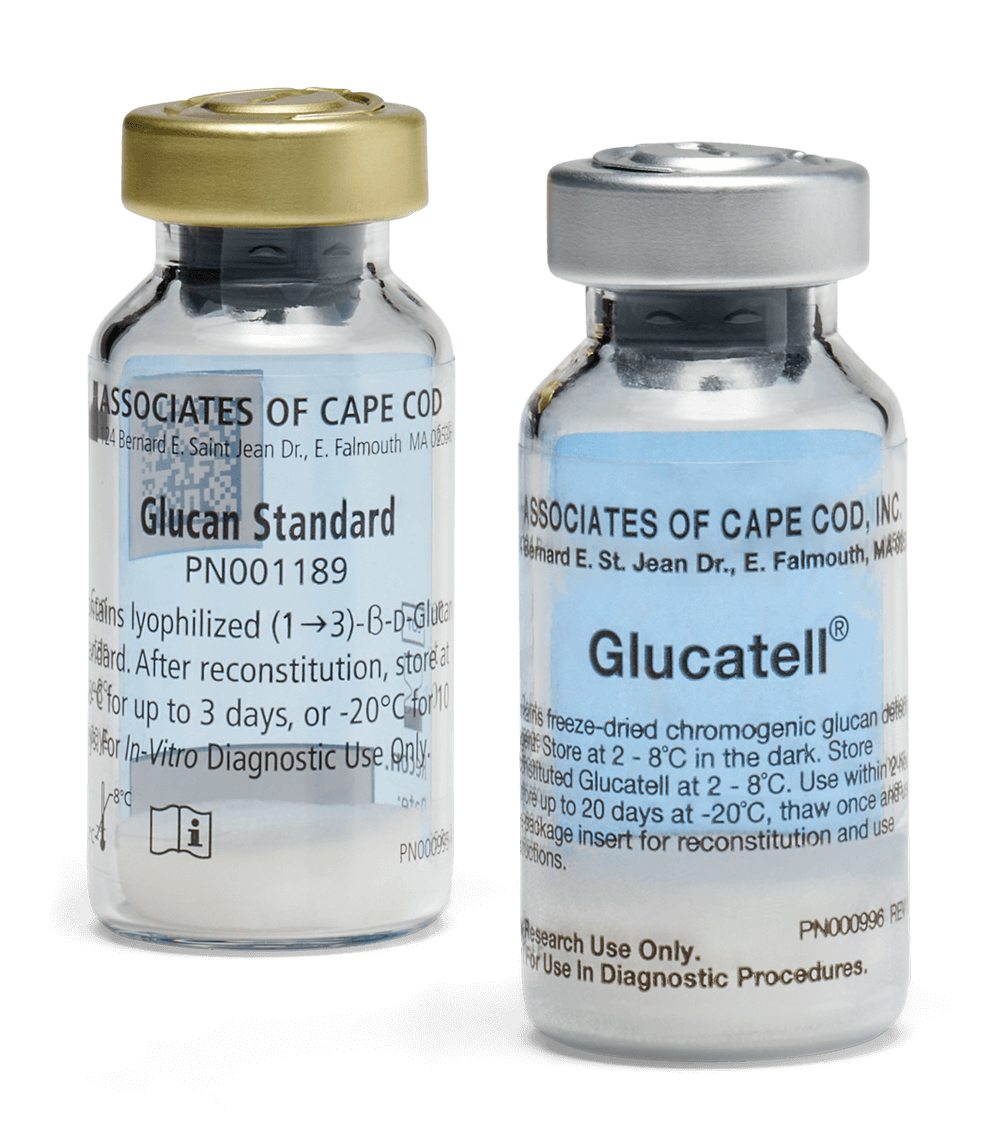
There are two approaches to glucan detection. One, the subtraction method, uses two assays for endotoxin, one of which has a blocking substance to reduce the response of the assay to glucan in the sample. The difference between the two results is proportional to the amount of glucan present. The second method for glucan testing relies on a direct measurement of (1→3)-β-D-glucan using an assay specific for (1→3)-β-D-glucan. It is quantitative, specific, and much more accurate than the subtraction method. The only available versions of this assay are called Glucatell® and Fungitell® and both are available only from ACC.